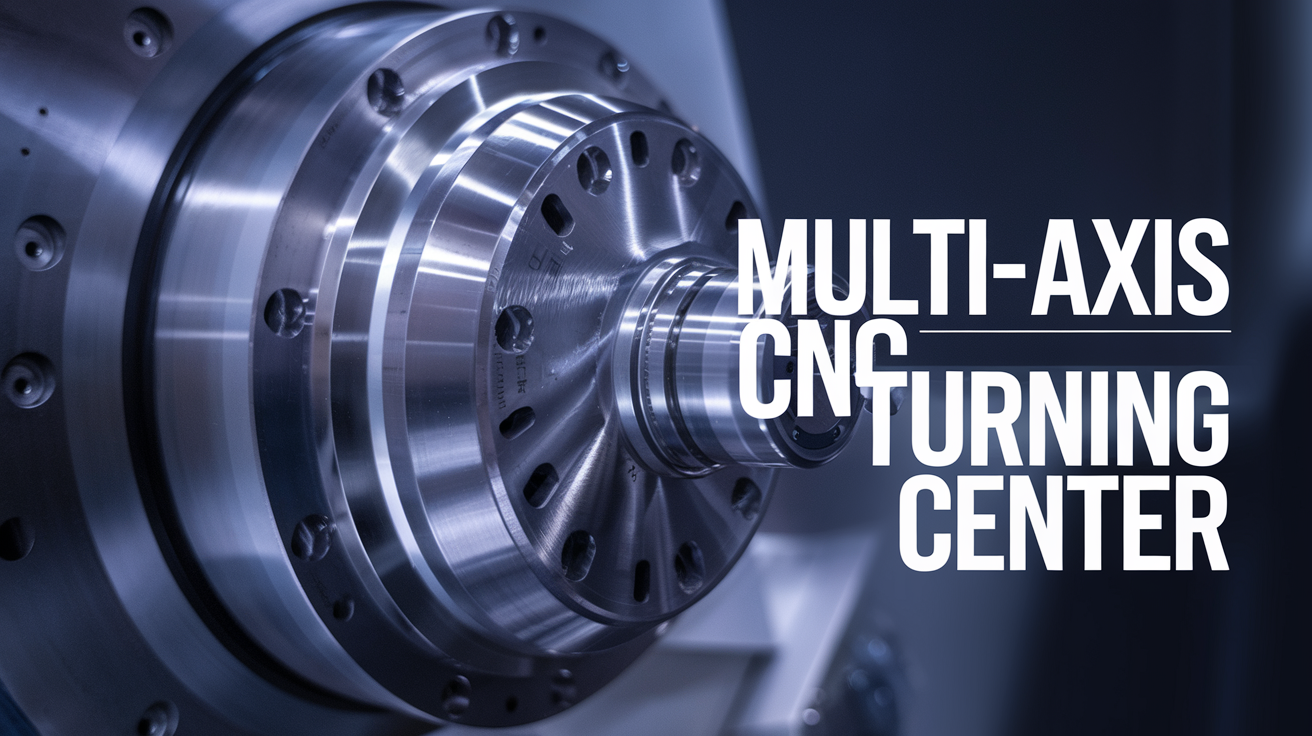
Multi-Axis Turning Center Selection Matrix for Indian Auto Component Manufacturers: Y-Axis vs 5-Axis Capabilities for EV Drivetrain Parts Under Automotive PLI Scheme
Complete selection matrix for Y-axis vs 5-axis turning centers for Indian EV component manufacturers. ROI analysis, PLI scheme eligibility, technical specs.
As India's electric vehicle revolution accelerates under the ₹26,000 crore Automotive PLI scheme, auto component manufacturers face a critical technology decision: investing in multi-axis turning centers to capture high-value EV drivetrain manufacturing opportunities.
I'm Manish Bandi, founder of Unimake Works in Hyderabad, and over the past five years, I've watched Indian manufacturers struggle with this exact decision. The transition from conventional 2-axis lathes to multi-axis turning centers represents a significant capital investment—typically ₹2.5 to ₹8 crore depending on configuration—but the potential returns in the EV component space are equally substantial.
This guide provides a practical selection framework based on real production requirements, ROI calculations, and PLI scheme alignment for Indian auto component manufacturers.
Understanding Multi-Axis Turning Technology for EV Components
Multi-axis turning centers combine rotational cutting (traditional turning) with additional linear axes that enable complex geometries in a single setup. For EV drivetrain components, this capability is transformational.
Traditional 2-axis CNC lathes operate on X-axis (radial movement) and Z-axis (longitudinal movement). Multi-axis configurations add:
Y-axis capability: Enables off-centerline milling operations, cross-drilling, and eccentric features without secondary setups. Investment range: ₹2.5-4.5 crore for quality Japanese or Taiwanese machines.
Full 5-axis capability: Adds B-axis (tool rotation) and C-axis (spindle rotation/indexing), enabling complete part machining including complex angular features. Investment range: ₹5-8 crore for production-grade equipment.
For EV components like motor housings, transmission gears, and battery enclosure components, these capabilities reduce setup time by 30-40% and improve positional accuracy by eliminating multiple fixture transfers.
EV Drivetrain Components Driving Multi-Axis Demand
The EV component landscape differs fundamentally from traditional automotive parts. Understanding which components justify multi-axis investment is critical.
Electric motor housings require eccentric cooling channels, off-center mounting bosses, and precise internal features—ideal Y-axis applications. A typical motor housing that requires three setups on conventional equipment can be completed in a single setup with Y-axis capability, reducing cycle time from 45 minutes to 28 minutes based on our production data.
Transmission components for single-speed EV gearboxes involve complex gear profiles, internal splines, and angular oil passages. Five-axis capability enables complete machining including gear cutting and spline generation without rechucking.
Battery enclosure mounting components demand high precision with multiple angular holes for thermal management systems. Y-axis cross-drilling eliminates secondary operations entirely.
Inverter housings require complex internal cavities with cooling fins—these components showcase the full capability of multi-axis technology.
The PLI scheme specifically targets these high-value components, offering incentives of 13-16% on incremental sales for advanced technology automotive parts. Multi-axis capability positions manufacturers to claim these incentives while meeting the technical requirements of EV OEMs.
Y-Axis vs 5-Axis Configuration: Technical Selection Matrix
The decision between Y-axis and full 5-axis capability should be driven by component geometry, production volume, and customer requirements.
Y-axis turning centers suit manufacturers producing cylindrical components with off-center features. If 70% or more of your component features fall within ±45 degrees of the primary axis, Y-axis capability likely suffices. These machines excel at cross-holes, flats on round parts, eccentric bores, and slot milling.
Full 5-axis turning centers justify their premium when component geometry includes complex angular features beyond ±45 degrees, integrated gear cutting requirements, complete part machining from bar stock with zero secondary operations, or when customer specifications explicitly require single-setup capability for traceability.
COMPARISON TABLE:
Capability | Y-Axis Turning Center | 5-Axis Turning Center
Investment Range | ₹2.5-4.5 crore | ₹5-8 crore
Setup Reduction | 25-35% vs conventional | 40-60% vs conventional
Ideal Component Complexity | Moderate (off-center features) | High (complex angular geometry)
Cycle Time Advantage | 15-25% improvement | 30-45% improvement
Operator Skill Requirement | Moderate (3-4 months training) | Advanced (6-8 months training)
Programming Complexity | Moderate (CAM required) | High (advanced CAM essential)
Tool Magazine Capacity | 24-40 tools typical | 40-80 tools typical
Maintenance Cost (Annual) | ₹3-5 lakh | ₹6-10 lakh
Floor Space Required | 25-35 sq meters | 35-50 sq meters
PLI Scheme Eligibility | Qualifies for Tier 2 components | Qualifies for Tier 1 components
Typical ROI Period | 3-4 years | 4-5 years
Energy Consumption | 25-35 kW | 40-55 kW
ROI Calculation Framework for Indian Manufacturers
Justifying multi-axis investment requires clear financial analysis tied to actual production scenarios.
For a typical Y-axis turning center at ₹3.5 crore, consider a manufacturer producing EV motor housing components. Annual production capacity: 24,000 pieces at 85% utilization. Setup time reduction from 45 minutes to 15 minutes per batch (average batch size 50 pieces) saves 600 hours annually. At a machine hour rate of ₹1,200, this represents ₹7.2 lakh in direct savings.
Cycle time reduction from 45 minutes to 28 minutes per piece increases capacity by 37%. At an average component price of ₹2,800 per piece with 22% margin, additional production of 5,000 pieces annually generates ₹30.8 lakh in additional gross profit.
Quality improvement through single-setup machining reduces rejection rate from 3.2% to 0.8%, saving approximately ₹16 lakh annually on a ₹6 crore revenue base.
Total annual benefit: ₹54 lakh against investment of ₹3.5 crore yields a 3.2-year payback period before considering PLI incentives, which can add 13-16% revenue boost on incremental sales.
For 5-axis configurations at ₹6.5 crore, the calculation requires higher complexity components and larger production volumes to justify the premium. Manufacturers should target components with selling prices above ₹5,000 per piece with annual volumes exceeding 15,000 units.
Supplier Selection Criteria for Indian Market
Machine selection significantly impacts long-term productivity and ROI. Based on Indian market conditions, consider these factors:
Japanese manufacturers (DMG Mori, Nakamura-Tome, Citizen) offer superior reliability and precision but command premium pricing—typically 25-35% above Taiwanese equivalents. Service networks in India are strong, with response times under 48 hours in major manufacturing hubs.
Taiwanese manufacturers (Goodway, Victor, Hartford) provide excellent value with 80-85% of Japanese performance at significantly lower investment. Service quality has improved substantially, though spare parts availability can be challenging for newer models.
South Korean options (Doosan, Hyundai Wia) occupy the middle ground with competitive pricing and improving service networks, particularly strong in southern manufacturing clusters.
Critical evaluation criteria should include spindle power and torque for machining tough materials like high-strength aluminum alloys used in EV components, thermal stability systems for maintaining micron-level tolerances during extended production runs, tool changing speed since multi-axis operations involve frequent tool changes, and CAM software compatibility with your existing design ecosystem.
Demand demonstration machining of your actual components before finalizing. A 10-15% price premium is worthwhile for proven performance on your specific part geometry.
Leveraging Automotive PLI Scheme for Multi-Axis Investment
The ₹26,000 crore Automotive PLI scheme explicitly supports advanced manufacturing technology investments for EV component production.
To qualify, manufacturers must achieve minimum investment thresholds: ₹50 crore for Tier 1 suppliers over four years, or ₹25 crore for Tier 2 component manufacturers. Multi-axis turning center investments count toward these thresholds as advanced manufacturing equipment.
Incentive structures provide 13% on incremental sales for companies meeting investment and sales targets in Year 1, scaling to 16% by Year 4 for consistent performers. For a component manufacturer growing from ₹15 crore to ₹35 crore annual revenue through EV component addition enabled by multi-axis capability, PLI incentives could contribute ₹2.6 crore in Year 1 alone on the ₹20 crore incremental revenue.
The scheme requires domestic value addition of at least 50% by Year 4. Multi-axis capability enables you to machine components domestically that previously required import, directly supporting this requirement.
Application deadlines require component categorization certification by NATRIP (National Automotive Testing and R&D Infrastructure Project) facilities. Begin this process 6-8 months before planned equipment commissioning to align PLI benefits with production ramp-up.
Implementation Roadmap for Multi-Axis Turning Centers
Successful implementation extends beyond equipment purchase to operational integration.
Workforce development represents the primary challenge. Multi-axis programming requires CAM proficiency, not just G-code knowledge. Budget 4-6 months for operator training, ideally conducted at the machine manufacturer's facility with your actual components. Training costs typically run ₹3-5 lakh per operator but dramatically reduce the learning curve.
CAM software investment is non-negotiable for multi-axis work. Solutions like Mastercam, EdgeCAM, or hyperMILL cost ₹8-15 lakh for initial licenses but reduce programming time by 60-70% versus manual methods. Ensure your CAM system includes simulation capability to prevent costly collisions during program development.
Fixture strategy changes fundamentally with multi-axis capability. Standard chucks often suffice for Y-axis work, but 5-axis operations may require custom workholding solutions costing ₹2-8 lakh per component family. Plan these costs into your component quotations.
Production scheduling must account for the learning curve. First-article cycle times typically run 2-3x the optimized cycle time. Plan 8-12 weeks for process stabilization before committing to customer delivery schedules.
Future-Proofing Your Multi-Axis Investment
EV technology continues evolving rapidly. Future-proof your investment by selecting equipment with automation integration capability for potential lights-out manufacturing expansion, IoT connectivity for predictive maintenance and OEE monitoring aligned with Industry 4.0 expectations, modular tool systems that adapt to changing component requirements without major retrofits, and adequate spindle power reserves since EV components increasingly use higher-strength materials requiring greater cutting forces.
The Indian EV component market is projected to reach ₹1.8 lakh crore by 2030. Multi-axis turning capability positions your facility to capture high-value segments of this growth, particularly as OEMs increasingly source domestically under Atmanirbhar Bharat initiatives.
For Indian auto component manufacturers, multi-axis turning centers represent more than equipment upgrades—they're strategic enablers for participating in India's EV transformation. The combination of technical capability, PLI scheme incentives, and growing domestic demand creates a compelling investment case for manufacturers willing to embrace advanced manufacturing technology.
The decision between Y-axis and 5-axis configurations should align with your specific component portfolio, customer requirements, and growth strategy. Start with detailed component analysis, build conservative ROI models, and engage with multiple suppliers before committing. The ₹26,000 crore PLI opportunity won't wait for late movers.
Get Precision CNC Parts from Unimake Works
Looking for high-quality CNC machined parts? Get a free quote today.