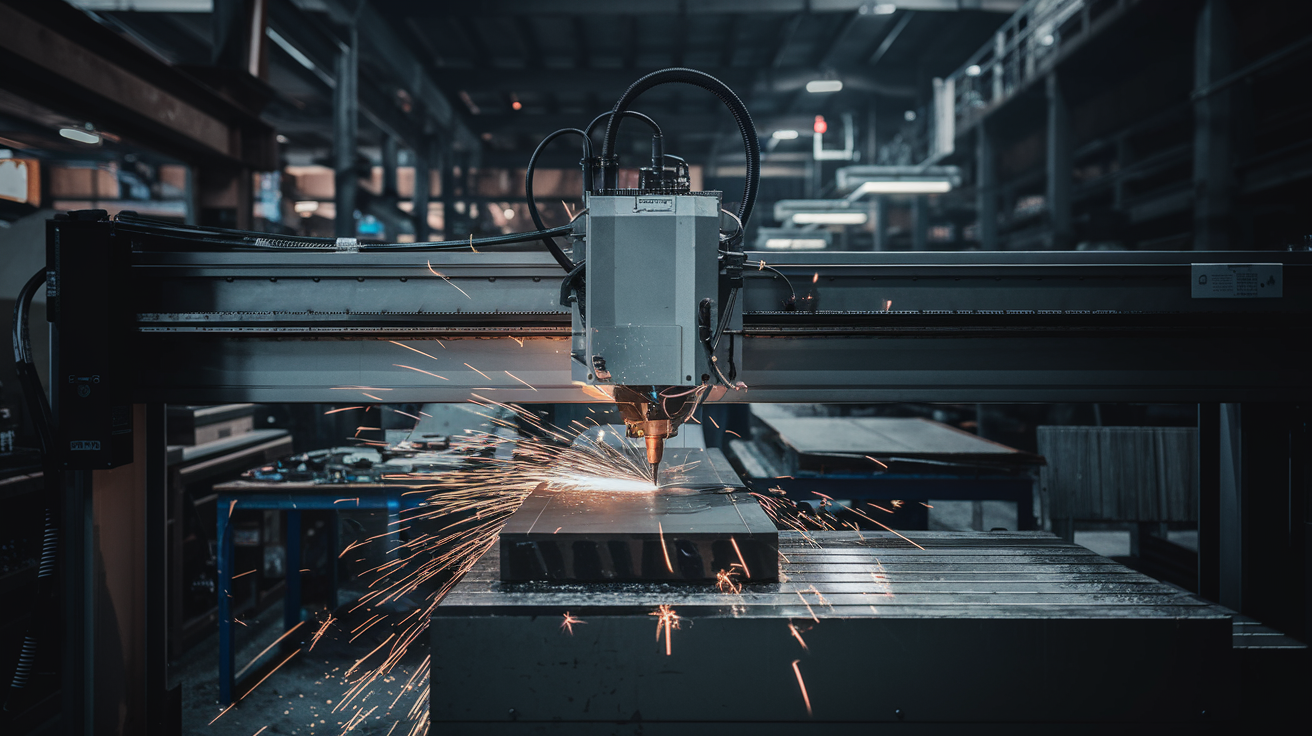
Hybrid Manufacturing Integration: Combining Additive and CNC for Indian Production
Complete guide to hybrid manufacturing combining 3D printing with CNC machining. Real costs, ROI data, and implementation strategy for Indian shops.
Hybrid Manufacturing Integration: Combining Additive and CNC for Indian Production
As the founder of Unimake Works in Hyderabad, I've watched Indian manufacturing evolve dramatically over the past five years. The most exciting development I'm seeing in 2026 is hybrid manufacturing - the integration of additive and subtractive processes in a single workflow. This isn't just another manufacturing buzzword. It's a fundamental shift that's helping Indian shops like ours compete globally while reducing material waste by up to 30 percent.
Let me share what I've learned about implementing hybrid manufacturing in the Indian context, including real numbers, practical challenges, and why this technology is particularly relevant for our manufacturing ecosystem.
What is Hybrid Manufacturing and Why It Matters for Indian CNC Shops
Hybrid manufacturing combines additive manufacturing (typically metal 3D printing or directed energy deposition) with conventional CNC machining in an integrated process. Instead of choosing between additive or subtractive, you leverage both technologies in sequence on the same machine or in a coordinated workflow.
The basic principle is simple: use additive processes to build near-net-shape parts quickly with minimal material waste, then use precision CNC machining to achieve final dimensions, surface finishes, and tight tolerances. Think of it as rough shaping with additive and finishing with subtractive methods.
Why does this matter for Indian manufacturers? Three primary reasons. First, material costs. When working with expensive alloys like Inconel 718 or titanium Ti-6Al-4V, traditional CNC machining can waste 70 to 85 percent of raw material as chips. Hybrid manufacturing reduces this waste dramatically. Second, lead times. Building complex geometries additively is faster than removing material from solid billets. Third, design freedom. You can create internal cooling channels, lattice structures, and organic geometries impossible with conventional machining alone.
At Unimake Works, we've been exploring hybrid workflows for aerospace and medical components since late 2025. The results have been compelling enough that we're planning a full hybrid system investment in Q3 2026.
Key Technologies Enabling Hybrid Manufacturing
Directed Energy Deposition Systems
Directed Energy Deposition (DED) is the most common additive technology used in hybrid manufacturing. A focused energy source - typically a laser or electron beam - melts metal powder or wire as it's deposited layer by layer. DED systems can add material to existing parts, repair worn components, or build near-net-shape preforms for subsequent machining.
In the Indian market, companies like Wipro 3D are offering DED-capable systems starting around INR 2.5 crore to INR 4 crore. International brands like DMG MORI and Mazak offer hybrid machines starting at INR 5 crore and going up to INR 15 crore for high-end five-axis systems with integrated DED capabilities.
The deposition rates vary by system but typically range from 50 grams per hour to 5 kilograms per hour depending on laser power and material. Feature resolution is generally plus or minus 0.5 mm to 1 mm, which is why CNC finishing is essential.
Powder Bed Fusion with Machining Centers
Another hybrid approach involves using separate powder bed fusion systems for additive manufacturing followed by CNC machining in a coordinated workflow. This isn't true single-machine hybrid manufacturing, but the integrated process delivers similar benefits.
Powder bed fusion systems like Selective Laser Melting (SLM) or Electron Beam Melting (EBM) create parts with better resolution than DED - typically plus or minus 0.1 mm to 0.2 mm - but still require machining for critical features, threaded holes, and precision mating surfaces.
The advantage of this approach is lower initial investment. You can start with a mid-range metal 3D printer (INR 80 lakh to INR 2 crore) and use your existing CNC machining centers for finishing operations.
Material Waste Reduction: The Numbers That Matter
Let me share specific numbers from a titanium aerospace bracket we quoted in March 2026. This part had complex internal geometry and multiple machined features.
Traditional CNC approach: Starting with a 2.5 kg titanium billet, final part weight 400 grams. Material waste: 2.1 kg or 84 percent. At current titanium Ti-6Al-4V prices in India (approximately INR 4,200 per kg), that's INR 8,820 in waste per part.
Hybrid manufacturing approach: Build a 650 gram near-net-shape preform additively, machine to final 400 gram part. Material waste: 250 grams or 38 percent. Additive powder waste adds another 150 grams (recycling losses). Total material cost reduction: approximately 65 percent per part.
For a production run of 100 parts, this translates to material savings of INR 5.7 lakh. These numbers make hybrid manufacturing economically viable even with higher equipment costs.
The material savings are even more dramatic with expensive superalloys. Inconel 718 currently costs around INR 6,800 per kg in India. For complex turbine components where buy-to-fly ratios can reach 15:1 or 20:1, hybrid manufacturing isn't just beneficial - it's essential for competitive pricing.
Application Areas Where Hybrid Manufacturing Excels
Aerospace Components
Aerospace is the leading adopter of hybrid manufacturing globally and in India. Components like turbine blades, structural brackets, engine mounts, and landing gear parts benefit enormously from the technology. The ability to create optimized internal structures while maintaining precision external features is transformative.
Indian aerospace suppliers to HAL, Bharat Forge, and international OEMs are increasingly evaluating hybrid capabilities. The Make in India aerospace initiative is driving demand for advanced manufacturing technologies that can compete with global suppliers.
Medical Implants and Surgical Tools
Custom orthopedic implants, dental prosthetics, and surgical instruments represent another strong application. Hybrid manufacturing allows patient-specific geometries with biocompatible materials like titanium or cobalt-chrome, finished to surgical precision.
The Indian medical device market is growing rapidly, and hybrid manufacturing enables local production of complex implants that previously required imports.
Tooling and Mold Repair
One often-overlooked application is tool and die repair. Instead of scrapping expensive molds or cutting tools, DED-based hybrid systems can add material to worn areas and machine back to specification. For large plastic injection molds costing INR 15 lakh to INR 50 lakh, repair versus replacement economics are compelling.
Several tool rooms in Pune and Bangalore are investing in hybrid repair capabilities specifically for this application.
Process Comparison: Traditional vs Hybrid Manufacturing
Traditional CNC Machining Process:
Starting point: Solid billet or forging
Material utilization: 15 to 30 percent typical
Setup complexity: Multiple setups for complex parts
Lead time: 3 to 6 weeks for complex parts
Design constraints: Limited to subtractive geometries
Tooling costs: High for complex 5-axis work
Hybrid Manufacturing Process:
Starting point: Near-net-shape additive preform
Material utilization: 60 to 85 percent typical
Setup complexity: Single setup on integrated machine
Lead time: 1 to 3 weeks for complex parts
Design constraints: Minimal, supports complex internal features
Tooling costs: Lower, less material removal required
Integrated Additive-Subtractive Workflow:
Starting point: CAD file direct to additive
Material utilization: 70 to 90 percent with powder recycling
Setup complexity: Transfer between systems required
Lead time: 2 to 4 weeks depending on coordination
Design constraints: Must plan for support removal and machining access
Tooling costs: Moderate, optimized rough-finish strategy
Implementation Challenges in the Indian Context
Capital Investment and ROI Timeline
The biggest barrier is upfront cost. A true hybrid manufacturing system with integrated additive and five-axis machining starts around INR 5 crore. For most Indian CNC shops operating on thin margins, this represents years of profit.
Our ROI analysis at Unimake Works suggests a three to five year payback period assuming steady utilization with high-value materials. This works for aerospace and medical applications but may not justify investment for general machining work.
An alternative approach is starting with separate additive and subtractive systems in a coordinated workflow. A metal 3D printer at INR 1.2 crore plus existing CNC capacity can deliver 70 percent of the benefits at 30 percent of the cost.
Skills and Training Requirements
Hybrid manufacturing requires a different skill set than traditional CNC programming. Operators need to understand additive process parameters, support structure generation, material properties of as-printed versus machined surfaces, and integrated CAM strategies.
In India, training resources for hybrid manufacturing are still limited. We've been working with equipment vendors for operator training, but practical expertise requires hands-on experience. Budget INR 5 lakh to INR 8 lakh annually for training and skill development in the first two years.
Material Supply Chain
Metal powders for additive manufacturing have limited availability in India. Titanium and Inconel powders must often be imported, adding cost and lead time. Powder specifications are critical - particle size distribution, flowability, and purity directly impact part quality.
We're seeing domestic powder production increase, with companies like Wipro 3D and GKN Powder Metallurgy establishing Indian operations. Prices are gradually becoming competitive with imports, but supply chain reliability remains a concern.
Practical Implementation Roadmap for Indian Manufacturers
Based on our experience and discussions with other Indian manufacturers, here's a practical roadmap for implementing hybrid manufacturing capabilities.
Phase One: Assessment and Planning (3 to 6 months). Identify suitable parts in your current production mix. Look for components with high material costs, complex geometries, or long lead times. Conduct design for hybrid manufacturing analysis. Calculate potential material savings and lead time reductions with specific numbers. Develop business case with realistic volume projections.
Phase Two: Pilot Implementation (6 to 12 months). Start with separate additive and subtractive systems rather than integrated hybrid machines. This reduces risk and investment. Partner with additive manufacturing service bureaus for initial parts while building internal expertise. Select 2 to 3 pilot parts with clear success metrics. Develop integrated CAM workflows and process documentation.
Phase Three: Scaling and Integration (12 to 24 months). Based on pilot results, decide on integrated hybrid system investment or continued coordinated workflow. Train additional operators and engineers. Expand part portfolio and customer applications. Optimize powder recycling and material handling processes.
Phase Four: Advanced Capabilities (24 months plus). Develop in-house design for additive manufacturing expertise. Implement closed-loop quality control with in-process monitoring. Explore advanced applications like multi-material parts or functionally graded materials.
Quality Control Considerations for Hybrid Parts
Quality assurance for hybrid manufactured parts requires attention to both additive and subtractive process outputs. The interface between as-printed and machined surfaces needs particular scrutiny.
Key inspection points include: porosity in additive sections using CT scanning or ultrasonic testing, dimensional accuracy of final machined features to print tolerances (typically plus or minus 0.025 mm to plus or minus 0.05 mm for precision work), surface finish on machined areas (Ra 0.8 to Ra 3.2 microns depending on application), and material properties verification through destructive testing of qualification parts.
We use coordinate measuring machines for dimensional verification and surface roughness testers for finish validation. For critical aerospace parts, third-party material testing confirms mechanical properties meet specifications.
The Future of Hybrid Manufacturing in India
The hybrid manufacturing market in India is at an inflection point. Early adopters in aerospace, medical, and high-value tooling are proving the technology's value. As equipment costs decrease and material supply chains mature, adoption will accelerate across broader manufacturing sectors.
Government initiatives supporting advanced manufacturing and the push for import substitution in defense and aerospace create favorable conditions. I expect to see 10x growth in hybrid manufacturing installations across India between 2026 and 2028.
For CNC shops like Unimake Works, hybrid manufacturing represents both opportunity and competitive necessity. The shops that master this technology will win high-value work in aerospace, medical, and advanced industrial applications. Those that don't risk becoming commodity providers competing solely on price.
The integration of additive and subtractive manufacturing isn't replacing traditional CNC machining. It's expanding what's possible, enabling parts that couldn't be manufactured economically before, and giving Indian manufacturers tools to compete globally on technology rather than just labor cost.
If you're evaluating hybrid manufacturing for your operation, start with the numbers. Calculate material waste on your most expensive parts. Identify components where lead time reduction would win new business. Build a realistic business case. The technology is ready. The question is whether your manufacturing strategy is ready to evolve with it.
Get Precision CNC Parts from Unimake Works
Looking for high-quality CNC machined parts with tight tolerances? Unimake Works delivers precision parts with fast turnaround and competitive pricing. Get a free CNC quote today and experience the difference of working with a trusted Indian manufacturer.