How to Keep Your Tools & Machines Rust-Free: A Complete Guide for CNC Shop Owners and Machinists
Learn practical rust prevention methods for CNC tools, tool holders and machine beds with Indian product suggestions, daily maintenance tips and shop-floor best practices.
If you've ever walked into your shop on a Monday morning and found a rust bloom on your machine bed or a tool holder that's seized in the spindle, you know exactly how frustrating — and expensive — rust can be. At Unimake Works, we run CNC machining operations in Hyderabad under ISO 9001:2015 and AS9100D certification, which means cleanliness, preventive maintenance, and surface protection aren't optional — they're written into our quality system.
This guide is for shop floor owners, machinists, and operators who want practical, no-nonsense answers: why rust happens, how to stop it before it starts, and which products actually work in Indian conditions without burning a hole in your budget.
Why Do CNC Tools and Machines Rust in the First Place?
Rust is iron oxide. It forms when iron or steel comes into contact with oxygen and moisture simultaneously. You don't need a coastal city or a monsoon to get rust — even a well-ventilated shop in Hyderabad will see surface oxidation on bare metal if tools are left exposed overnight.
Here's what's actually happening in your shop:
Oxygen exposure on bare steel. Every time you remove a tool holder from the spindle and set it on the tool trolley, the uncoated steel shank is exposed to air. Over hours and days, oxygen reacts with the surface iron and you get that familiar reddish-brown stain. This is exactly what we see at Unimake Works — holders that sit idle for a day or two in the tool cabinet start showing early oxidation on the taper and shank surfaces.
Coolant residue. Metalworking coolant is water-based, and water accelerates oxidation dramatically. Coolant that dries on your machine bed or inside a tool holder pocket doesn't just leave yellow stains — it leaves mineral deposits and accelerates rusting of the underlying metal. If you've ever seen that yellowish film on your machine's cast iron bed or guard panels, that's dried coolant with dissolved metal particles.
Temperature fluctuation. When a shop cools down at night and warms up in the morning, moisture can condense on cold metal surfaces — the same way a cold glass sweats in summer. Even in drier cities, seasonal humidity swings during June through September will catch you off guard.
Neglected surfaces during downtime. A machine that sits idle over a long weekend or a holiday without any protective coating is far more vulnerable than one that runs every day. Moving parts and coolant flow actually help keep some surfaces clean. Idle machines don't have that advantage.
The Real Cost of Rust in a CNC Shop
Before we get into solutions, it's worth being clear about what rust actually costs you — because too many shop owners treat it as a cosmetic problem until it isn't.
A corroded tool holder taper creates runout. Runout means poor surface finish, dimensional deviation, and scrapped parts. A customer who ordered aerospace components to AS9100D tolerances won't accept a part that failed because your tool holder was corroded. A rusted machine bed loses its flatness reference over time. A seized spindle or corroded linear guide requires expensive service calls and downtime. In a B2B manufacturing context, rust isn't a maintenance inconvenience — it's a quality and delivery risk.
Quality Risk
A single corroded BT40 taper can cause 0.01–0.03 mm runout, enough to fail an inspection on a tolerance-critical aerospace or medical part.
How to Protect Tool Holders the Right Way
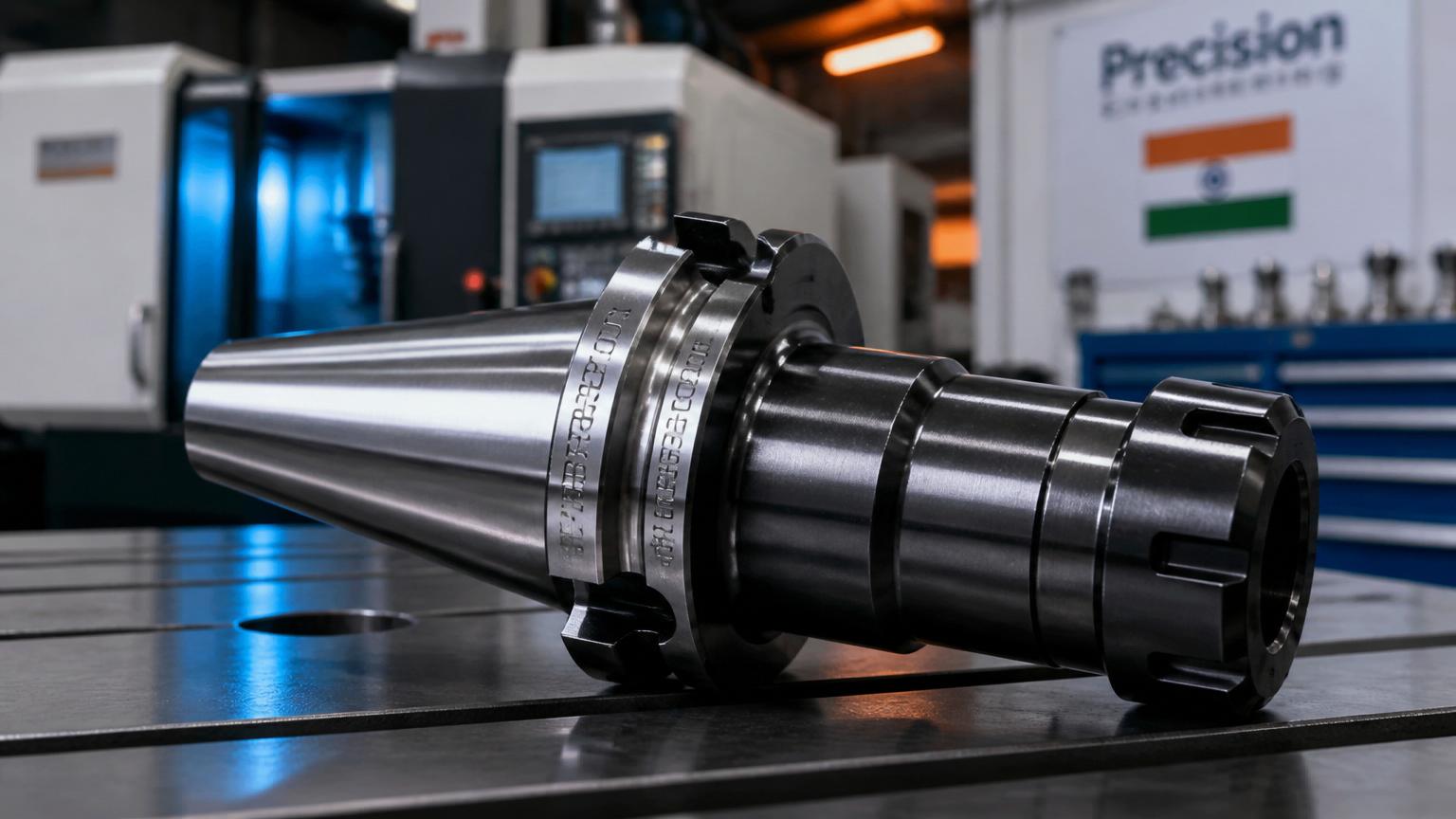
The most vulnerable part of any CNC tool setup is the tool holder — specifically the taper, the pull stud, and the shank. Here's the protocol that works:
Every time a tool holder comes out of the spindle, wipe the taper clean with a lint-free cloth to remove any coolant, chips, or moisture. Then apply a thin film of rust-preventive oil to the taper and shank before placing it in the tool cabinet. This takes about 15 seconds per holder and costs almost nothing. The oil forms a barrier between the steel surface and atmospheric oxygen.
Don't leave tool holders on the machine table or bed overnight. Always return them to the cabinet. If you store tools in foam-lined drawers, make sure the foam isn't retaining moisture — old foam that has absorbed coolant over time can actually cause rust rather than prevent it.
Pull studs deserve special attention. They're small, easy to forget, and they're threaded steel components that sit at the top of the holder inside the spindle. A corroded pull stud can fail catastrophically. Inspect them regularly, replace them per the manufacturer's recommendation (typically every 250,000 clamping cycles for BT holders), and keep them lightly oiled when stored.
Shop Floor Tip
Keep a small bottle of rust-preventive oil and a stack of lint-free cloths right next to each machine's tool trolley — friction in the workflow is the #1 reason machinists skip the wipe-and-oil step.
Protecting the Machine Bed and Worktable
Cast iron machine beds are the surface most prone to rust damage in a CNC shop. Cast iron has excellent vibration damping but it rusts quickly without protection. Here's how to manage it:
After every shift, wipe down the machine bed and worktable with a clean cloth to remove coolant and chips. Then apply a thin coat of rust-preventive oil or spray across the entire surface. Don't skip the T-slots — coolant pools there and chips pack in, both of which accelerate corrosion.
For yellow staining from dried coolant, a dedicated machine cleaner or degreaser works well. Apply it, let it sit for a minute, then scrub with a non-abrasive pad and wipe clean. Follow with a rust-preventive coat afterward — cleaning strips away any existing oil protection, so you must reapply.
For machines that will sit idle for more than a few days (long holidays, scheduled shutdowns), apply a heavier coat of rust preventive oil on all exposed cast iron and steel surfaces. Some shops use a soft wax-based product for longer-term protection. When the machine comes back into service, wipe off the heavy coat and you're ready to run.
5 Proven Rust-Prevention Products Available in India
These are products that are either manufactured in India, distributed widely through Indian distributors and e-commerce, or cost-effective enough for a small to mid-size shop to use consistently. All five are available on Amazon India, Industrybuying, or Moglix.
WD-40 Specialist Long-Term Corrosion Inhibitor Spray
WD-40 is a name every machinist knows, and while the standard WD-40 formula is only a short-term moisture displacer, the WD-40 Specialist Corrosion Inhibitor is a completely different product designed for actual rust prevention. It forms a clear protective film that lasts up to a year on stored metal parts.
Best for: Tool holders, spare parts storage, machine surfaces during shutdown periods.
Search on Amazon India ↗ External marketplace link
Tectyl 506 Rust Preventive Compound (Valvoline India)
Tectyl is the industry standard for rust prevention in automotive and aerospace manufacturing globally, and it's available in India through Valvoline distributors and online platforms. Tectyl 506 is a wax-based compound that provides excellent long-term protection, particularly for stored components, fixtures, and machine beds during extended shutdowns.
Best for: Machine beds, fixtures, jigs, and long-term component storage.
Search on Industrybuying ↗ External marketplace link
Rust-X VCI Poly Bags and Films (Indian Brand)
Rust-X is an Indian manufacturer of Vapor Corrosion Inhibitor (VCI) packaging, and their products are used by major automotive and engineering exporters across India. VCI bags release a corrosion-inhibiting vapor that protects metal surfaces inside the sealed package without any direct contact — which means no oily residue on precision ground surfaces.
Best for: Storing precision tool holders, cutters, gauges, and finished machined parts during transit or inventory holding.
Search on Amazon India ↗ External marketplace link
Export Packaging Note
For air and sea shipments to Germany, the UK, UAE or the USA, VCI bagging combined with desiccant pouches inside a sealed export carton is the standard we use at Unimake Works for precision machined parts.
Motul Chain Lube or Multigrease
For general lubrication of machine ways, screws, and exposed metallic surfaces where a dedicated rust preventive isn't available, Motul products offer reliable protection at reasonable Indian market prices. Motul has a wide distribution network across India including Amazon and offline distributors.
Best for: Guide ways, lead screws, exposed mechanical components, door rails.
Search on Amazon India ↗ External marketplace link
Henkel Loctite 8008 C5-A Copper Anti-Seize or Loctite 7063
Henkel's Loctite range is available across India through industrial distributors and platforms like Moglix and Industrybuying. For CNC shops, the Loctite 7063 is particularly useful — it's a cleaner and rust remover that also leaves a light protective film. For threaded components like pull studs and spindle tooling where galling is a risk alongside corrosion, the Loctite anti-seize compounds are invaluable.
Best for: Pull studs, threaded tooling, fasteners, and initial cleaning of corroded surfaces.
Search on Moglix ↗ External marketplace link
Need CNC parts manufactured with proper surface protection?
Upload your drawing and get an RFQ from Unimake Works.
Building a Daily, Weekly, and Monthly Rust-Prevention Routine
Knowledge without habit doesn't prevent rust. Here's a simple schedule you can implement in any shop:
Maintenance Checklist
Daily (End of Every Shift): Wipe down machine bed and table with a clean cloth. Apply a light coat of rust-preventive oil to the bed. Return all tool holders to the cabinet after wiping and oiling the taper. Check and clean coolant levels and concentration — diluted coolant loses its rust-inhibitor content.
Weekly: Inspect all stored tool holders for early rust signs. Clean T-slots thoroughly. Check machine way lubrication levels. Wipe down all exposed vertical surfaces and guard panels where coolant splash has dried.
Monthly: Do a full inspection of pull studs — replace any showing corrosion or wear. Clean foam liners in tool cabinets or replace if they're retaining moisture. Check coolant concentration with a refractometer — running too dilute accelerates corrosion of internal machine components. Apply a fresh coat of protective oil to any cast iron surfaces that showed staining during the month.
What We Do at Unimake Works
Under our ISO 9001:2015 and AS9100D quality management system, rust prevention isn't left to individual judgment — it's a documented procedure. Every tool holder is inspected at setup and returned with a protective oil coating after use. Our machine beds are cleaned and protected at shift end. Coolant systems are monitored weekly for concentration and contamination.
When we supply precision CNC machined components to customers in Germany, the Netherlands, the UK, the UAE, or the United States, those parts arrive protected. We use VCI packaging for precision components in export shipments, ensuring the part that passed inspection in our facility is the same part the customer receives — clean, dimensionally accurate, and free of surface damage.
That's the standard rust prevention helps you maintain. It's not about a perfect, spotless shop — it's about repeatable, reliable quality output.
Start Protecting Your Shop Today
Whether you're running a two-machine job shop in Hyderabad or a 20-machine production facility supplying tier-1 automotive or aerospace customers, rust prevention is one of the highest-return maintenance investments you can make. The products listed above are cost-effective, proven in Indian market conditions, and available online so you can order today and implement this week.
If you're an international procurement manager evaluating Indian CNC suppliers, rust and surface protection practices are a direct indicator of how a shop manages process discipline overall. A shop that takes care of its tooling takes care of your parts.
Looking for a CNC machining partner who takes quality and process discipline seriously?
Unimake Works (Hyderabad, India) is ISO 9001:2015 and AS9100D certified, supplying precision CNC machined components globally. We work with buyers in Germany, the Netherlands, Poland, the UK, UAE, and the USA.
Request a quote: contact@unimakeworks.com
Visit www.unimakeworks.com to learn more about our capabilities, certifications, and export process.