
How to Choose a CNC Machining Supplier: 10 Questions to Ask Before You Send a Drawing
Choosing the wrong CNC machining supplier does not reveal itself immediately. It reveals itself at 11 PM when your production line is waiting, your first-articl
Choosing the wrong CNC machining supplier does not reveal itself immediately. It reveals itself at 11 PM when your production line is waiting, your first-article inspection has failed, and the shop you trusted is unreachable. By that point, you have already lost time, money, and credibility with your own customer.
This guide is written for procurement managers, sourcing engineers, and operations leads who are actively evaluating CNC suppliers — particularly those considering offshore partners in India. Each of the ten questions below is the kind that separates a capable, accountable supplier from one that will cost you far more than the unit price suggested.
For each question, we have included what a confident, trustworthy supplier should say — and what Unimake Works actually says, backed by our ISO 9001:2015 and AS9100D certifications out of Hyderabad.
---
Why the RFQ Moment Is the Riskiest Point in Your Supply Chain Most supplier relationships go wrong not during machining, but before it — during the selection phase. A supplier who cannot answer these questions clearly before receiving your drawing will not become clearer once your IP, your schedule, and your budget are on the table.
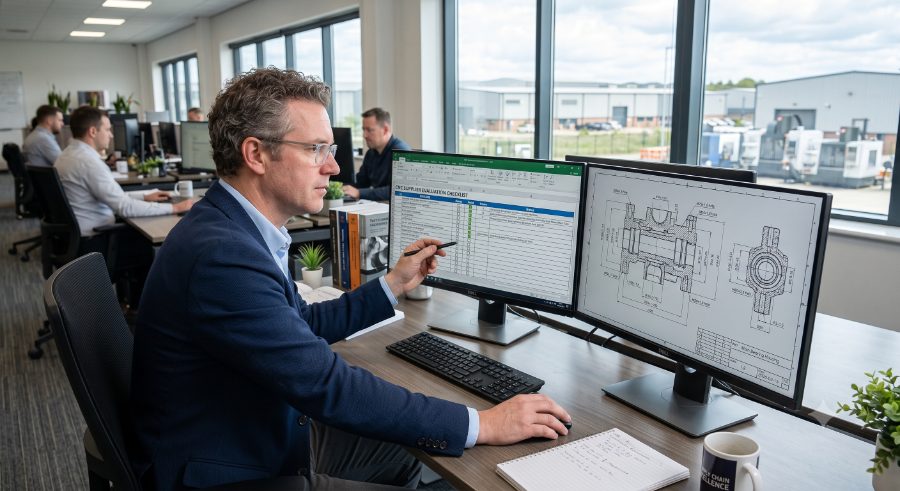
Use this checklist before you send a single file.
---
Question 1: Are You Quality Certified — and Can You Prove It Right Now? This seems obvious, but the follow-up matters. Many shops list "ISO certified" on their website and cannot produce a current certificate, cannot name their certifying body, or hold a certification that expired two years ago.
What to expect from a serious supplier: An immediate PDF of their current certificate, including the scope of certification, the certifying body, and the expiry date.
Unimake's answer: We hold ISO 9001:2015 and AS9100D certification. AS9100D is the aerospace quality management standard — it demands documented control of processes, traceability of materials, calibrated measurement equipment, and nonconformance management. We send our certificates within minutes of being asked, not after a follow-up email.
---
Question 2: What Is Your Quote Turnaround Time? A 5–7 business day quote response is not acceptable when your development timeline is tight or your production window is narrow. Slow quoting is also a signal: it often means the shop does not have a structured DFM (Design for Manufacturability) review process and is essentially figuring out your part from scratch each time.
What to expect from a serious supplier: A defined, committed turnaround — ideally with a dedicated point of contact assigned at the moment your RFQ arrives.
Unimake's answer: We assign a dedicated project manager to every RFQ the moment it is received. Our standard quote turnaround is 8 to 12 hours. For a recent client who sent an urgent RFQ for 30 components — each weighing 25 kg — our project manager engaged immediately, conducted a full DFM review, and delivered a complete quotation within 10 hours. That same engagement uncovered a material availability problem that would have stopped any ordinary shop cold. More on that in Question 6.
---
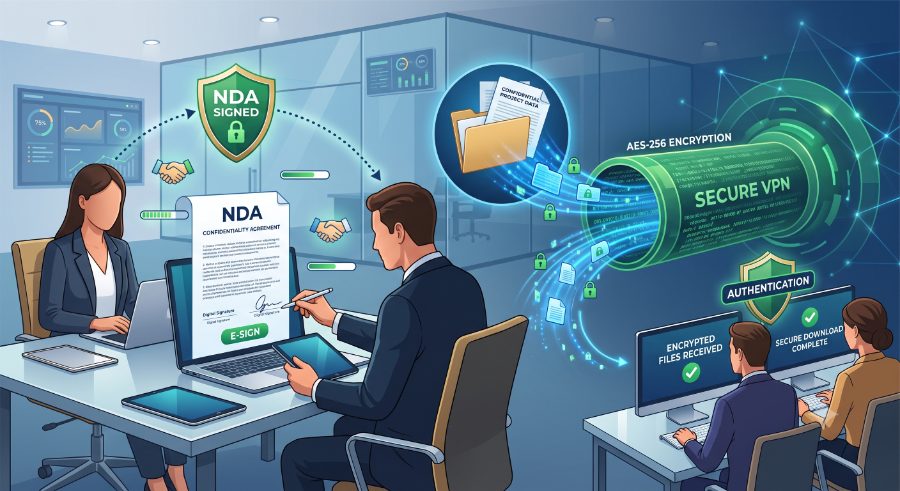
Question 3: Will You Sign an NDA Before Reviewing My Drawing? Your drawing is your IP. It contains your geometry, your tolerances, your material specifications, and in many cases your product architecture. Sending it to a supplier who refuses to sign a Non-Disclosure Agreement — or who treats the request as unusual — is a serious risk.
What to expect from a serious supplier: Immediate willingness to execute an NDA before any technical files change hands, with no pushback.
Unimake's answer: NDA execution is standard procedure at Unimake, not an exception. We understand that international buyers — particularly from Germany, the UK, and the USA — operate under strict IP protection obligations to their own customers. We countersign promptly and maintain document control over all received drawings under our ISO 9001:2015 quality system.
---
Question 4: How Do You Handle Inspection — and What Does Your Report Look Like? This is where many suppliers fail badly, and it is one of the most consistent gaps we observe in the market. Ask a supplier for a sample inspection report and their answer will tell you everything. Common responses from underqualified shops include: "We check all parts before shipping," "We use calipers and micrometers," or simply a blank stare at the phrase "First Article Inspection Report."
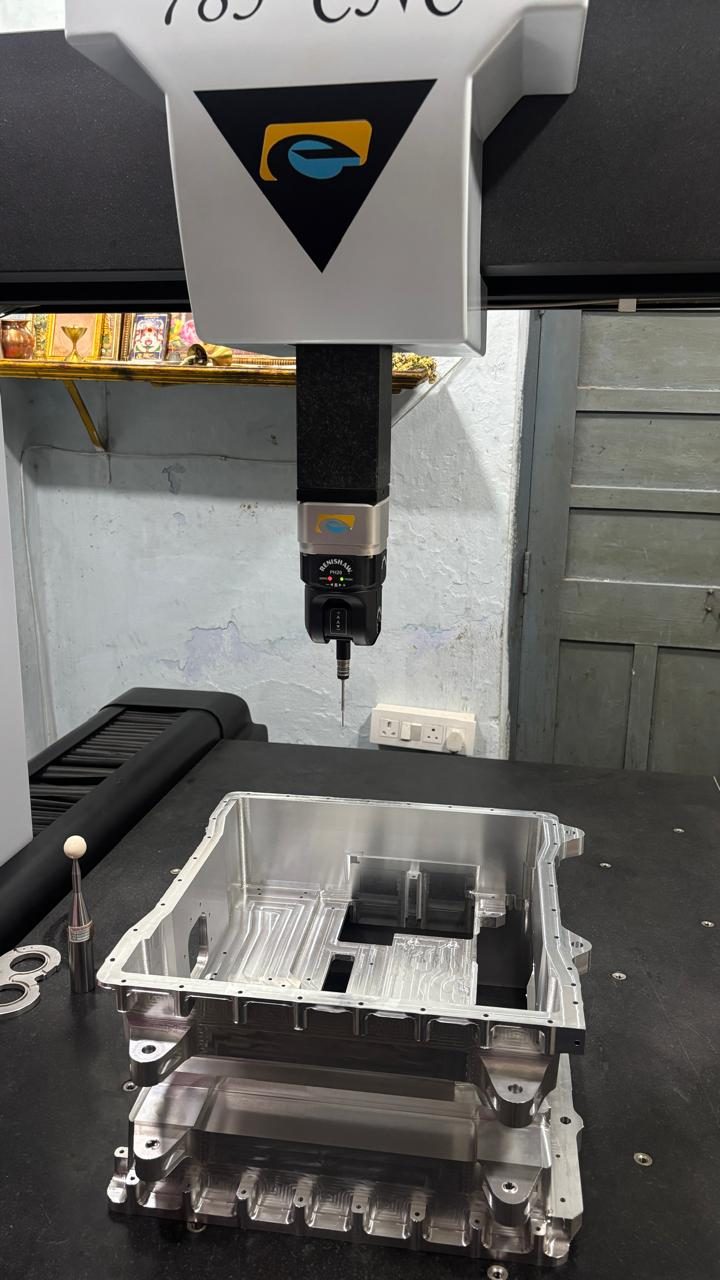
What to expect from a serious supplier: A structured inspection process aligned to international standards, in-house CMM capability or access to a certified metrology lab, and the ability to produce a complete FAIR (First Article Inspection Report) or dimensional report to AS9102 or equivalent.
Unimake's answer: We conduct in-house CMM inspection and can produce full dimensional reports, material certifications, surface finish reports, and hardness test results depending on the specification. Our inspection documentation follows ISO standards and is formatted for direct use by our clients' incoming quality teams. We do not ship a part and hope the buyer finds no issues — we resolve quality at source.
---
Question 5: What Tolerances Can You Consistently Hold? There is a significant difference between what a shop claims to achieve and what it can demonstrate consistently across a production run. Tolerances quoted in a sales conversation mean nothing without process capability data behind them.
What to expect from a serious supplier: Clear specification of achievable tolerances by machine type and feature, supported by examples from actual production.
Unimake's answer: For standard precision components, we routinely hold tolerances of ±0.01 mm. For tight-tolerance aerospace work — the kind requested by our Australian aerospace buyers — we have achieved ±0.005 mm using Haas high-precision machining centres in our partner facilities. These are not theoretical limits. They are demonstrated results on production parts.
---
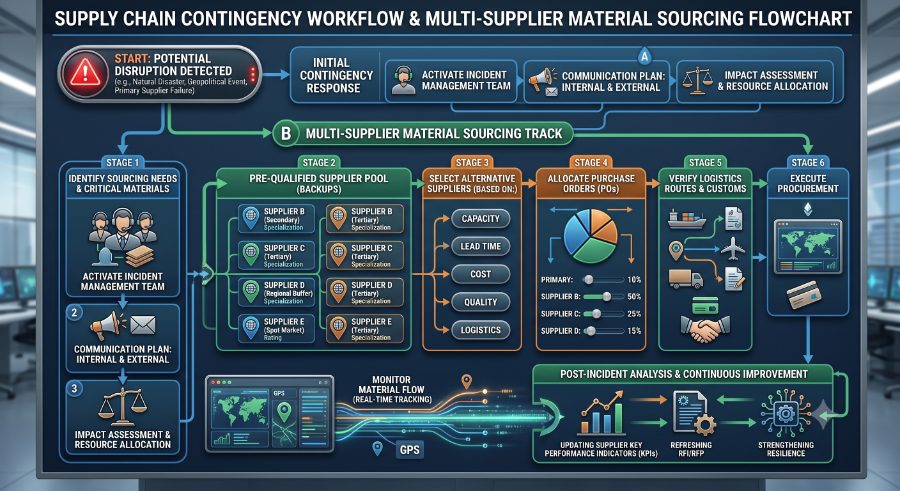
Question 6: What Happens When Something Goes Wrong — What Is Your Contingency Plan? This is the question most procurement managers forget to ask until they need the answer. Material shortages, machine breakdowns, tooling failures, and shipping disruptions are not hypothetical. They are certainties across a long enough supply relationship. A supplier who has no documented contingency plan is a supplier who will go silent when things get difficult.
What to expect from a serious supplier: A clear, practiced response: backup material suppliers, redundant machining capacity, alternative logistics pathways, and a project manager who proactively communicates rather than waits to be chased.
Unimake's answer: We maintain relationships with multiple material suppliers across India specifically to protect against shortages. When a source fails, we shift immediately to alternates — and we communicate proactively at every step.
The 25 kg component RFQ mentioned earlier is the clearest example of this. After the DFM and quotation were delivered within 10 hours, we discovered the required material was unavailable from any supplier in Hyderabad. Our team spent eight continuous hours contacting vendors across India. The material was ultimately located only through a Chinese supplier network, which led us to a single Indian vendor with the required stock. We secured the material, machined the sample, shipped it by air freight, and had a confirmed client-inspected sample within three days — with production approval on day four. A standard shop would have substituted material without telling the client, or simply abandoned the job.
---
Question 7: Do You Have 24/7 Project Manager Support? Time zone differences are real. A procurement manager in Germany or the Netherlands starting their day at 8 AM CET is operating 12.5 hours ahead of a supplier in India. If your only point of contact works a standard 9-to-5 shift, you will spend your morning waiting for answers your afternoon needs.
What to expect from a serious supplier: Genuine availability during your working hours, not a chatbot or an auto-reply.
Unimake's answer: Every Unimake project has a dedicated project manager with 24/7 availability. This is not a call centre. It is the same person who reviewed your drawing and quoted your job — available to answer technical and logistical questions across time zones.
---
Question 8: What Materials and Processes Do You Regularly Work With? A supplier who primarily machines mild steel and aluminium is not the same supplier you want for titanium aerospace brackets or hardened tool steel components. Ask for recent material examples and process capability, not a theoretical materials list.
What to expect from a serious supplier: Direct experience with your material, documented by past production examples or material certifications from previous jobs.
Unimake's answer: Unimake regularly machines aluminium alloys, stainless steel, titanium, Inconel, engineering plastics, and specialty alloys for aerospace, defence, automotive, and industrial sectors. We quote across 3-axis, 4-axis, and 5-axis CNC milling, CNC turning, and multi-process components.
---
Question 9: Can You Support First Article and Production Volumes? Some shops are prototype specialists who struggle at volume. Others are high-volume production floors with no patience for iterative development. Knowing where your supplier sits on that spectrum — before you commit — prevents a painful transition mid-project.
What to expect from a serious supplier: Clarity about their capacity at both stages, with documented handover processes from first article to production release.
Unimake's answer: We support the full journey: DFM review, prototype/first article, FAI documentation, and production runs. Our process is designed so that the same project manager who manages your first article manages the transition to production — eliminating the knowledge loss that happens when shops hand off between teams.
---
Question 10: What Does Your Logistics and Packaging Process Look Like? Your part can be machined perfectly and arrive damaged or delayed because no one thought about export packaging, customs documentation, or freight routing. International buyers — especially those importing to Germany, the UK, the UAE, or the USA — need a supplier who understands export compliance and protective packaging requirements.
What to expect from a serious supplier: Experience with international freight, proper export documentation, and packaging designed to protect precision components across long-haul shipping.
Unimake's answer: We manage complete export logistics including FIA airfreight for urgent shipments, sea freight for volume orders, proper customs documentation, and VCI packaging or foam-formed protective packaging for precision parts. The 25 kg aerospace components referenced earlier were shipped by air freight and arrived in client-inspectable condition within the committed window.
---
The Supplier That Answers All 10 Honestly Is the One Worth Trusting The questions above are not a filter designed to exclude suppliers. They are a framework designed to find the ones who will not let you down when your production, your customer, or your schedule is on the line.
A supplier confident enough to answer every question with specifics — certifications, tolerances, turnaround times, contingency plans, inspection standards — is a supplier who has built those capabilities deliberately. That is who you want holding your drawings.
---
Ready to Evaluate Unimake Works? Send us your drawing and ask us every question on this list. We will answer all of them before we quote, and we will quote within 8 to 12 hours.
Request a quote: [Submit your RFQ at unimakeworks.com](https://www.unimakeworks.com) Email us directly: Contact@unimakeworks.com Certifications: ISO 9001:2015 | AS9100D | NDA signed before drawing review
Unimake Works — Precision CNC Machining from Hyderabad, India, serving aerospace, defence, automotive, and industrial buyers in Germany, Netherlands, Poland, UK, UAE, and USA.