5-Axis CNC Machining: A Complete Guide for Indian Manufacturers
Discover how 5-axis CNC machining can transform your manufacturing capabilities. Complete guide on benefits, applications, and ROI for Indian businesses.
The Indian manufacturing sector is experiencing rapid transformation, and 5-axis CNC machining technology stands at the forefront of this revolution. As domestic manufacturers compete on global platforms, understanding and implementing advanced machining capabilities has become crucial for staying competitive.
What is 5-Axis CNC Machining
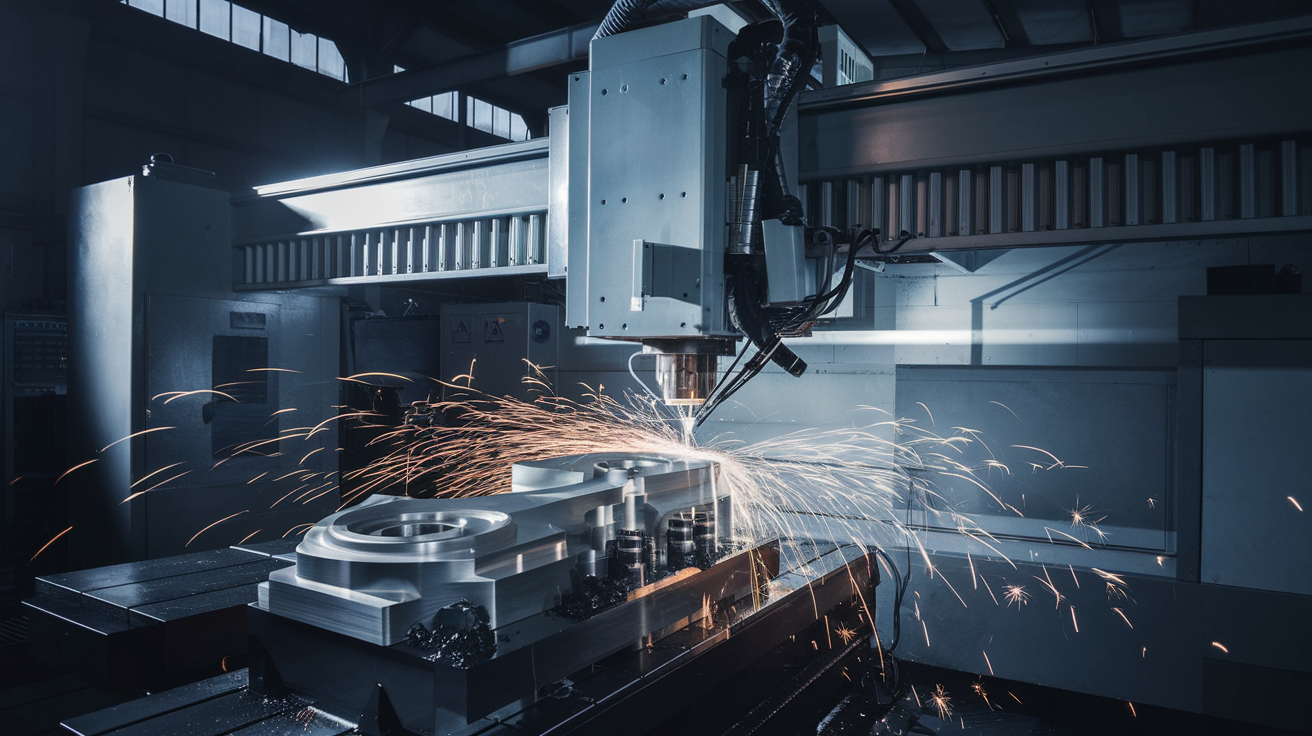
5-axis CNC machining refers to the ability of a CNC machine to move a part or tool on five different axes simultaneously. Unlike traditional 3-axis machines that operate along X, Y, and Z linear axes, 5-axis machines add two rotational axes, typically called A and B axes. This additional movement capability allows manufacturers to approach a workpiece from virtually any direction, eliminating the need for multiple setups and enabling the production of highly complex geometries.
The two additional rotational axes can be configured in different ways. The most common configurations include trunnion style, where the table rotates and tilts, and swivel-rotate style, where the spindle head moves. Each configuration offers specific advantages depending on the type of parts being manufactured.
Key Advantages for Indian Manufacturers
Indian manufacturers adopting 5-axis CNC machining technology gain several competitive advantages in both domestic and export markets. The ability to complete complex parts in a single setup dramatically reduces production time. What might require multiple operations on a 3-axis machine, with repeated repositioning and fixturing, can often be accomplished in one setup on a 5-axis machine.
This single-setup capability significantly improves accuracy. Each time a part is repositioned on a traditional machine, there is potential for error. By maintaining the workpiece in one position throughout the machining process, 5-axis technology eliminates these cumulative errors, resulting in superior precision and repeatability.
The quality of surface finish achieved with 5-axis machining is notably superior. The ability to tilt the cutting tool or table to the optimal angle means the tool can maintain better contact with the workpiece, reducing tool marks and improving surface quality. This is particularly valuable for Indian manufacturers serving aerospace, medical device, and automotive sectors where surface finish requirements are stringent.
Labor costs, while traditionally lower in India compared to Western markets, are steadily rising. 5-axis machining helps offset this trend by reducing the need for manual intervention. Fewer setups mean less time spent on part handling, fixture changes, and measurement verification between operations.
Applications Across Indian Industries
The aerospace sector in India is growing rapidly, with both defense and commercial aviation segments expanding. 5-axis machining is essential for producing complex aerospace components like turbine blades, structural components, and landing gear parts. The technology meets the strict tolerances and material requirements common in this industry.
The Indian automotive industry, already one of the largest globally, increasingly requires complex components for engines, transmissions, and chassis systems. 5-axis machining enables the production of intricate molds, dies, and direct-use components with the precision modern vehicles demand.
Medical device manufacturing in India is experiencing tremendous growth as the country positions itself as a global healthcare hub. 5-axis machining is ideal for producing surgical instruments, orthopedic implants, and dental devices where complex geometries and biocompatible materials are standard requirements.
The energy sector, including both conventional and renewable energy equipment manufacturing, benefits from 5-axis capability when producing turbine components, pump housings, and complex valve bodies that require precision machining from multiple angles.
Investment Considerations and ROI
The initial investment in 5-axis CNC machining equipment is substantial, typically ranging from 1 crore to 5 crores or more, depending on machine size, brand, and capabilities. However, Indian manufacturers should evaluate this investment against long-term returns rather than upfront costs alone.
Calculating ROI requires considering multiple factors. Reduced cycle times directly impact productivity, allowing manufacturers to accept more orders without expanding floor space. The elimination of multiple setups reduces labor hours per part, while improved accuracy decreases scrap rates and rework costs.
Many Indian manufacturers find that 5-axis capability opens doors to higher-value contracts, particularly for export markets where advanced manufacturing capabilities are prerequisites for supplier qualification. The premium pricing available for complex, precision components can significantly shorten payback periods.
Government initiatives supporting advanced manufacturing, including various subsidy schemes and technology upgrade programs, can help offset initial investment costs. Manufacturers should explore programs under Make in India and other manufacturing promotion schemes that may provide financial assistance or tax benefits.
Selecting the Right 5-Axis Machine
Choosing appropriate 5-axis equipment requires careful analysis of your specific manufacturing needs. Consider the size and complexity of parts you typically produce. Machine table size, load capacity, and working envelope must accommodate your current and anticipated future requirements.
Material considerations are crucial. If you primarily machine aluminum and softer materials, your requirements differ significantly from manufacturers working with titanium, Inconel, or hardened steels. Spindle power, torque, and machine rigidity must match your material requirements.
The control system represents the brain of any CNC machine. Leading brands like Siemens, Fanuc, and Heidenhain offer different features and programming approaches. Consider your team's existing expertise and the availability of skilled programmers familiar with specific control platforms in the Indian market.
Service and support infrastructure in India is a critical consideration. Evaluate the supplier's local presence, availability of spare parts, and response times for technical support. Machine downtime directly impacts profitability, making reliable local support essential.
Skill Development and Training
Implementing 5-axis technology requires investment in human capital alongside equipment. The programming complexity increases significantly with five-axis simultaneous movement. Manufacturers must either train existing staff or recruit personnel with relevant expertise.
CAM software proficiency becomes crucial. Modern 5-axis machining relies heavily on sophisticated CAM systems that generate toolpaths and simulate machining operations. Software options like Mastercam, Hypermill, and Powermill are popular choices, each with learning curves and specific strengths.
Many equipment suppliers offer training programs, and numerous institutes across India now provide specialized courses in advanced CNC programming. Cities like Pune, Bangalore, and Chennai have developed strong training ecosystems supporting advanced manufacturing technologies.
Creating a culture of continuous learning helps maximize returns on technology investments. Encouraging operators and programmers to explore advanced techniques, optimize processes, and share knowledge builds organizational capability over time.
Overcoming Implementation Challenges
Indian manufacturers transitioning to 5-axis machining commonly face specific challenges. The programming learning curve can initially slow production as teams adapt to more complex CAM software and machining strategies. Planning for this transition period helps manage customer expectations and maintains delivery schedules.
Fixturing for 5-axis machining requires different thinking compared to traditional machining. Fixtures must allow tool access from multiple angles while securely holding workpieces. Investing in modular fixturing systems and considering tombstone or pallet-based workholding can improve flexibility.
Power infrastructure can be a concern in some Indian locations. 5-axis machines require stable power supplies, and voltage fluctuations can damage sensitive electronics. Installing appropriate power conditioning equipment protects your investment and ensures consistent machine performance.
Environment control becomes more important with high-precision 5-axis machining. Temperature variations affect machine accuracy and part dimensions. Climate-controlled manufacturing areas help maintain the precision these machines are capable of achieving.
Future Trends and Opportunities
The global trend toward reshoring and supply chain diversification presents opportunities for Indian manufacturers with advanced capabilities. Companies worldwide are seeking reliable suppliers outside traditional manufacturing centers, and 5-axis capability positions Indian manufacturers as viable alternatives.
Integration with Industry 4.0 technologies is transforming CNC machining. Modern 5-axis machines equipped with sensors and connectivity enable predictive maintenance, real-time monitoring, and data-driven process optimization. Indian manufacturers adopting these technologies gain operational insights that drive continuous improvement.
Additive manufacturing and CNC machining are increasingly complementary rather than competitive technologies. Hybrid machines that combine both capabilities are emerging, and 5-axis machining often serves as the finishing process for additively manufactured parts, ensuring dimensional accuracy and surface finish requirements are met.
The push toward sustainable manufacturing aligns well with 5-axis technology. Reduced setups mean less energy consumption per part, while improved accuracy decreases material waste. These environmental benefits increasingly influence purchasing decisions in global supply chains.
Making the Strategic Decision
For Indian manufacturers considering 5-axis CNC machining, the decision should align with broader business strategy. If your customer base increasingly demands complex parts, shorter lead times, or tighter tolerances, 5-axis capability may be essential for maintaining competitiveness.
Start by analyzing your current product mix and pipeline. Identify parts that require multiple setups, have complex geometries, or are limited by current machine capabilities. Quantify the potential time and cost savings 5-axis machining could provide for these specific applications.
Consider your competitive positioning. In many sectors, 5-axis capability has shifted from competitive advantage to basic requirement for supplier consideration. Understanding where your industry stands on this curve helps time your investment appropriately.
Finally, view 5-axis machining as part of a broader capability development journey rather than an isolated equipment purchase. The combination of advanced machinery, skilled personnel, robust processes, and continuous improvement culture creates sustainable competitive advantage in modern manufacturing.
Indian manufacturers who successfully implement 5-axis CNC machining position themselves at the forefront of domestic manufacturing excellence while building capabilities to compete effectively in global markets. The technology represents a significant step toward the precision, efficiency, and sophistication that define world-class manufacturing operations.